Bringing Your Cat from the UK to China: Entry Conditions, Documents and Planning Checklist
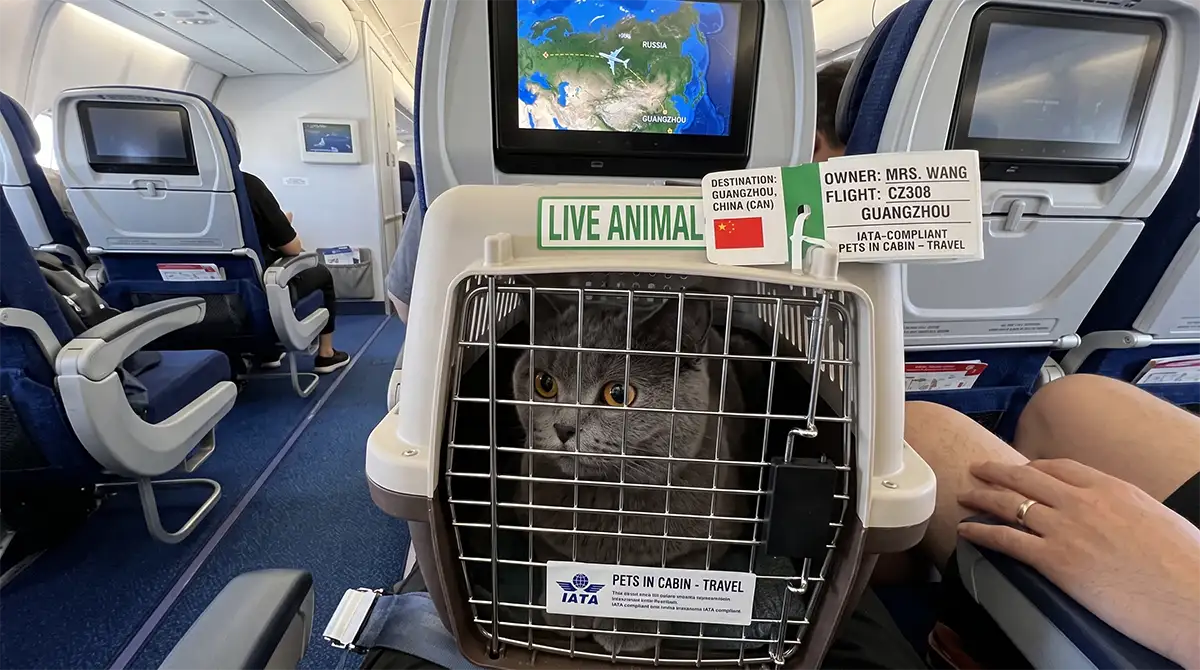
“What will happen to Bella after I return to China?”
That was the first question I asked myself after deciding to go back.
Bella and I returned to China in 2026. Planning matters, but no checklist can guarantee airline acceptance or customs clearance.
Policy check: 14 October 2026. This guide concerns accompanied pet cats entering mainland China. The UK appears on the designated-country list, but exemption from isolation is conditional.
I cannot reconstruct Bella’s airline, route, paperwork or entry-port outcome from the records I have. This checklist is for planning a new journey, not a timetable of ours.
1. Basic Entry Rules (Non-Negotiable Requirements)
Under GACC Announcement 2019 No. 5 (effective 1 May 2019), a traveller may bring one dog or cat per entry, with official health/quarantine and rabies vaccination certificates and an electronic microchip.
The government-published designated list includes the UK among 19 countries and regions. Pets meeting the relevant conditions and passing on-site inspection may avoid the default 30-day isolation. This is not a blanket exemption.
Before booking, check:
- A readable microchip and matching identity details throughout the records
- Valid rabies vaccination evidence
- The appropriate UK Export Health Certificate (EHC), not an EU Animal Health Certificate (AHC)
- Whether transit changes the applicable entry requirements; non-designated origins require additional antibody-test evidence for the exemption route
2. Start Planning Early: Work Back from Your Route
Two or three months may be a useful planning margin, but required preparation depends on vaccination history, transit and carrier availability. Ask an Official Veterinarian (OV) and destination customs before fixing dates.
| Stage | To-Do List |
|---|---|
| Before booking | Confirm each operating airline accepts the cat, the transport mode, transfer rules and destination port requirements. |
| Early veterinary planning | Have the OV check chip identification, rabies history and any testing or waiting period relevant to the route. |
| Before the certification appointment | Apply for the current China EHC through APHA and arrange an authorised OV. |
| Close to travel | Schedule examination and certification so the 14-day EHC validity covers arrival, plus any shorter carrier requirements. |
| Travel day | Follow the vet’s and airline’s feeding/water instructions; prepare the approved carrier and absorbent lining. Do not impose a 24-hour water restriction. |
3. Detailed Explanation of Key Documents
3.1 Microchip Identification
Arrange for the vet to scan the implanted chip and check that its number is legible and matches the paperwork. The OV must verify the cat’s identity for the China EHC.
If the chip is not ISO 11784/11785-compatible, ask destination customs and the OV what reader arrangements they will accept before travel. Carrying a scanner is not by itself a guarantee of clearance.
3.2 Rabies Vaccination Certificate
The current APHA guidance for EHC 8902 requires rabies vaccination before export, within validity and administered according to the product instructions, with the vaccination certificate attached.
Check chip identity, vaccination date, product, batch and manufacturer with the OV.
These documents do not establish a universal “30 full days before China entry” rule for every UK-origin itinerary. Ask the OV to check the vaccine instructions and the requirements for the actual destination and transit route.
3.3 EHC (Export Health Certificate) — The Most Critical Document
Use GOV.UK’s active China certificate 8902 and its current guidance. I cannot establish which certificate Bella used.
The specimen certificate states 14 days’ validity after issue. Arrange examination and signature with the OV to cover arrival and any carrier-specific deadline. A universal 48-hour rule is not stated there.
Application:
- Apply through the GOV.UK EHC service for departures from England, Scotland or Wales; Northern Ireland uses DAERA.
- Arrange the authorised OV in advance and provide identity, ownership and vaccination records.
- Attend the examination and have the OV complete the certificate if the requirements are met.
- Carry the signed documents and attached rabies evidence required for your journey.
Cost: obtain an itemised clinic quote; fees depend on the practice and the required work.
4. Flight Selection: Cabin vs Cargo
Cabin, accompanied hold baggage and manifest cargo are different services. Availability depends on the operating carrier, route, aircraft, breed and size. Do not assume every direct UK–China flight has the same rule.
A connection through Europe does not guarantee cabin travel throughout or automatic transit clearance. Check every leg and whether entering the EU requires a separate Animal Health Certificate. That document does not replace the China EHC.
Summary of Policies from Major Airlines
| Airline | Key Pet Policies |
|---|---|
| KLM | Cabin allowance on eligible flights: cat plus carrier ≤8 kg; carrier ≤46×28×24 cm, with room to move normally. Route, cabin-class and aircraft restrictions apply. Obtain a route quote, not the old £140 estimate. Official policy. |
| Lufthansa | Eligible cabin carriage: cat plus soft carrier ≤8 kg; maximum 55×40×23 cm, with room to stand, turn and lie naturally. Confirm each leg. Official policy. |
| British Airways | No ordinary pets in the passenger cabin; UK departures are arranged through its pet transport partner. This does not confirm a particular China flight. Official policy. |
These are examples for comparing carriers, not a record of Bella’s flight. Ask any other airline directly for written confirmation of its current pet service before planning around it.
Safe Booking Procedures
- Ask each operating carrier to confirm pet availability and restrictions before committing to non-refundable travel.
- Use that carrier’s booking or cargo process; not all services can be added as baggage online.
- Obtain confirmation for every leg, including carrier, total weight, fees and transfer handling.
5. Step-by-Step Guide to Customs Clearance
5.1 Departure Procedures at UK Airports
Check-in: follow the operating carrier’s document and arrival-time instructions; cargo handover can differ from passenger check-in.
Security: ask the departure airport how live animals are screened and where safe handling can take place. Do not assume every airport requires carrying a loose cat through the same procedure.
Comfort: familiar bedding and gradual carrier practice may help, but do not guarantee a stress-free flight.
5.2 China Entry Clearance Process (Quarantine Exemption)
For a pet accepted under the designated-origin route, an antibody test is not listed as an exemption condition in Announcement No. 5. That does not establish the requirements for a journey involving other countries.
- Declare the cat to customs and complete the required registration.
- Present the official health and vaccination certificates and allow chip verification.
- Customs conducts the on-site checks and decides whether the conditions for release are met.
- Pets requiring isolation must use a port with suitable facilities; missing essential certificates or other non-compliance can lead to return or disposal under the rules.
Confirm the entry port and any transit implications with customs before departure. Do not assume every arrival airport can isolate a pet.
6. Ultimate Checklist to Avoid Pitfalls
| Common Pitfalls | Specific Solutions |
|---|---|
| Documents | Ask the OV to confirm chip identity, rabies evidence and the EHC validity against arrival. |
| Transport | Get written acceptance, carrier limits and transfer handling from each operating carrier. |
| Arrival | Confirm entry-port arrangements and any transit requirements with the relevant authorities. |
7. Helpful Tips
Do not restrict water for 24 hours to avoid accidents. Plan access to water and feeding with the vet and carrier; KLM’s preparation guidance specifically calls for enough water.
This checklist is a starting point. Recheck the official rules and your confirmed route before departure; neither airline acceptance nor quarantine exemption is guaranteed by following a blog.